
Definition of the problem
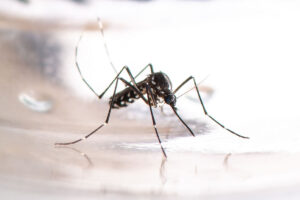
The Asian Tiger Mosquito Aedes albopictus has been introduced in Italy since 1990 and rapidly colonized the whole country. It earned notoriety among millions of Italians and foreign tourists for its daily aggressiveness and the irritation caused by its bites. But more importantly its vectorial capacity supported several Chikungunya and Dengue outbreaks stressing the need for more effective vector control measures.
It is evident that the currently available mosquito control strategies cannot guarantee the reduction of the mosquito population below the epidemic risk level or nuisance threshold.
Alongside these considerations, this species is particularly suitable for application of the SIT for several reasons:
- its spread is mainly linked to urban and suburban areas, while it cannot breed in natural and agricultural areas, thus strongly reducing the area to be targeted;
- the active dispersal capability of the species is limited to a few hundred meters from the breeding sites;
- it is relatively easy to mass rear under artificial conditions;
- as renewed international attention is being focused on the genetic based control strategy, including SIT, relevant technological advancements are expected supporting the application of the method.
The Sterile Insect Technique (SIT) is a biological pest control method based on area-wide inundative releases of sterile insects to reduce the reproduction in a field population of the same species (FAO). The SIT has been employed all around the world as part of area-wide integrated pest management programs (AW-IPM) over the past 60 years to contain, reduce, eliminate or prevent the establishment of insect pests of agronomic, veterinary and medical importance (IAEA).
The Sterile Insect Technique (SIT) is a biological pest control method based on area-wide inundative releases of sterile insects to reduce the reproduction in a field population of the same species (FAO). The SIT has been employed all around the world as part of area-wide integrated pest management programs (AW-IPM) over the past 60 years to contain, reduce, eliminate or prevent the establishment of insect pests of agronomic, veterinary and medical importance (IAEA).
Collaborations
Since 1999 CAA has activated several collaborations with key research entities:
- International Atomic Energy Agency (IAEA)
- Benaki Phytopathological Institute, Athens
- Department Agricultural Science, University of Bologna
- Department Genetic and Molecular Biology, University La Sapienza Rome
- Department of Biology, University Federico II Naples
- ENEA-CR Casaccia Sez. Biotec-Agro
- German Mosquito Control Association (GFS)
- Sanitary Physic Service S. Anna hospital Ferrara
- University of Applied Sciences and Arts of Southern Switzerland (SUPSI)
Progress of the SIT project targeting Aedes albopictus
Over the years all aspects relevant for the SIT strategy optimisation have been addressed at the CAA lab. From a technological perspective the current state of the art may be summed up as follows:
- mass rearing takes place without the use of host animals, as the blood is obtained from nearby slaughter facilities;
- larval rearing is fully standardized to guarantee homogeneous and reliable male production;
sexing is performed mechanically at the pupal stage by exploiting the difference in size between males and females; - males are sterilized by X-ray irradiation of the pupae in water;
- sterile male quality being a crucial aspect is regularly monitored in term of longevity, flight capacity and level of sterility;
- packaging system for sterile males suitable for air shipment by express courier;
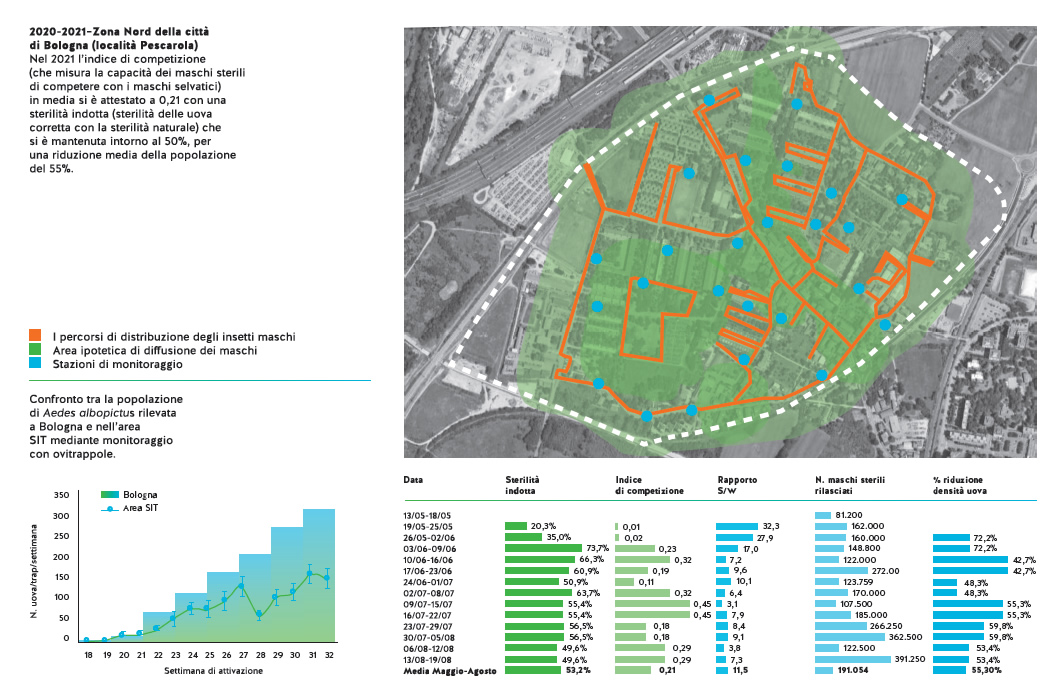
- pilot field releases are conducted in Italy and other European countries to evaluate the effectiveness in different settings and optimize the release strategy;
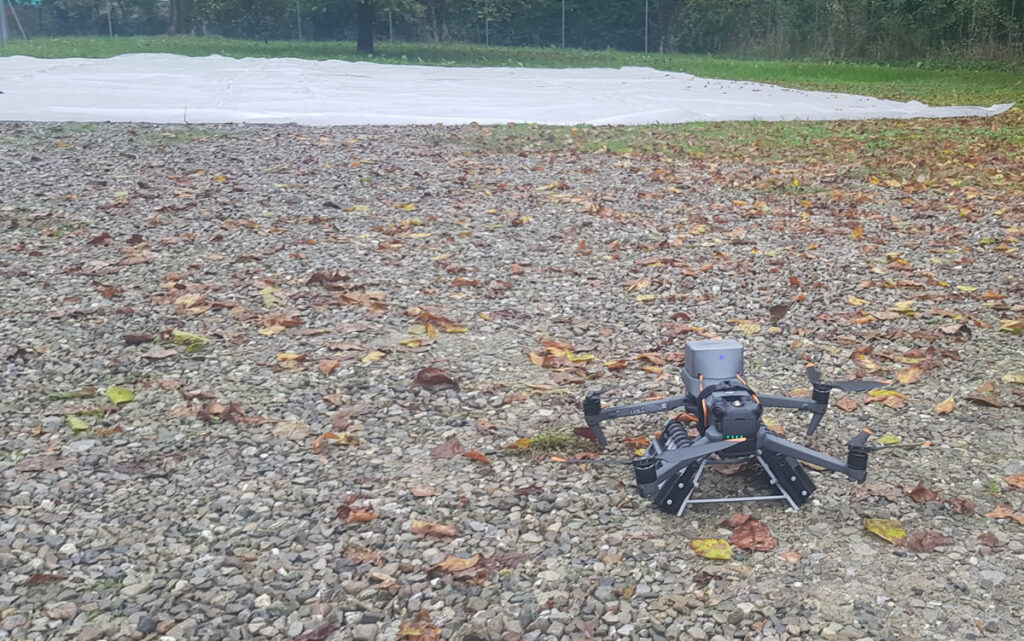
- development of aerial distribution systems using drones.

State of the art
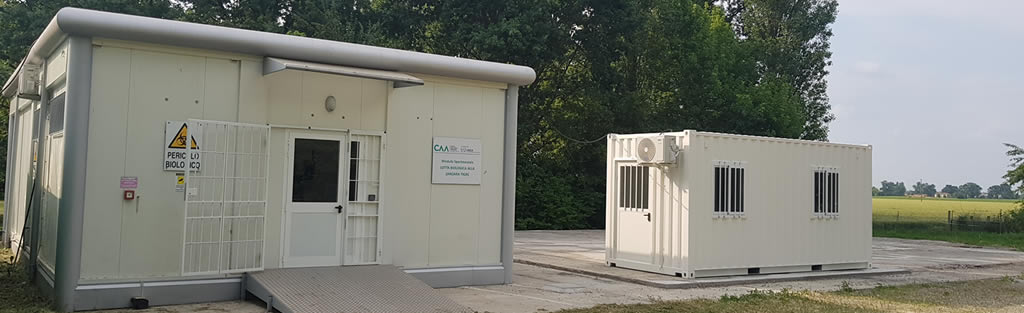
A modular prototype breeding plant is currently in operation with a production capacity of one million sterile males of Aedes albopictus per week. The sterile males produced are used to conduct demonstration pilot projects in real conditions in Italy (Bologna, Procida island) and European countries (Germany, Greece, Switzerland).
CAA, designated IAEA collaboration center since 2011, hosts foreign researchers interested in training and acquiring skills on Sterile Male technology applied to species of the Aedes genus.
A biofarm for the production of 10 million sterile males/week is in the executive planning phase.
National and international financial supports
- Italian Ministry of University and Research (2001-2002)
- ASL Brescia (1999-2000)
- Municipalities Desenzano d.G. (1999-2003)
- Rimini (2004)
- Bologna (2021-2025)
- Hera Rimini Srl (2004-2005)
- ENIA Reggio Emilia (2008-2009)
- IAEA (since 2007)
- EU FP7 INFRAVEC (2009-2014)
- EU LIFE CONOPS (2013-2018)
- EU HORIZON2020 INFRAVEC2 (2017-2020)
- EU HORIZON-INFRA-2021-EMERGENCY ISIDORe (2022-2025)
- Emilia-Romagna Region (2005-2015)